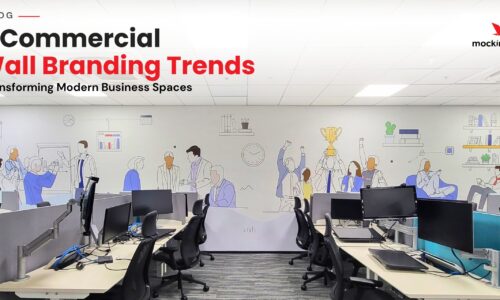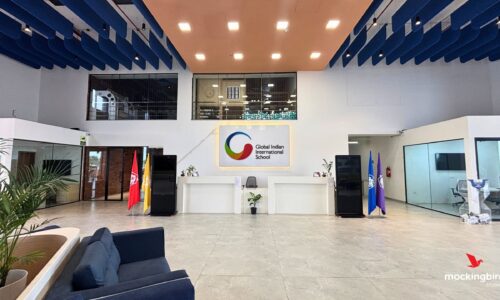
Your office is more than four walls, desks and meeting rooms. It is one of the most powerful physical expressions of your brand. Every day, employees experience it, clients and visitors form impressions from it, and new employees get their first sense of your culture from it. Yet, when companies plan their office interiors, workplace branding is often treated as an afterthought.
The right visual approach can transform an ordinary environment into a space that communicates purpose, culture and identity. Here are five common mistakes companies make when branding their offices and how to avoid them.
1. Focusing Only on the Logo
One of the most common mistakes is thinking that office branding means putting the company logo on walls. Your logo identifies your brand, but it doesn’t tell your entire story.
A well-branded workplace should communicate your company’s personality, values, vision and culture. Typography, colours, graphics, messaging, imagery and even the placement of visual elements can work together to create a cohesive brand experience. The goal shouldn’t be to make people see your logo everywhere. It should be to make them feel your brand throughout the space.
2. Designing Only for Visitors
Reception areas often receive the most attention because they create the first impression. But your employees spend far more time inside the workplace than your visitors do. A successful workplace should be designed with employees at the centre.
Think about how your spaces can celebrate people, showcase achievements, communicate company values and create a sense of belonging. When employees see their culture reflected in their environment, the workplace becomes more personal and meaningful. Your office shouldn’t just impress visitors. It should inspire the people who work there every day.
3. Choosing Aesthetics Over Purpose
A beautiful wall doesn’t automatically make it effective branding. Every visual element should have a purpose. A timeline can communicate the company’s journey. A values wall can reinforce culture. Wayfinding can improve navigation. A thoughtfully designed meeting room can support collaboration. A glass film can provide privacy while still maintaining the visual language of the brand.
Good workplace branding balances design, function and communication. The goal is not simply to fill empty walls, but to make every element contribute to the experience of the space.
4. Treating Every Space the Same
Different areas of an office serve different purposes, so they shouldn’t all look and feel identical. The reception area needs to welcome visitors. Collaboration areas can be energetic and engaging. Meeting rooms may require a more focused atmosphere, while employee zones can communicate culture and recognition.
Instead of repeating the same graphic throughout the office, think about how each space contributes to the larger brand story. This creates a workplace that feels connected without becoming repetitive.
5. Forgetting That Brands Evolve
Your company today may not be the same company five years from now. Businesses grow, teams change, brand identities evolve, new products and services are introduced, and workplace needs change too.
That’s why office branding should be planned with flexibility in mind. The best workplace branding solutions aren’t simply designed for how the office looks today. They are designed to remain relevant as the organisation grows and changes.
Workplace Branding Is More Than Decoration
Workplace branding is about more than simply making offices look attractive. It is about creating environments where brand, culture, people and purpose come together.
Your walls, glass partitions, meeting rooms and common areas can become powerful communication tools. They can tell your story, strengthen your identity and create an environment people genuinely connect with.
At Mockingbird Studios, we see every workplace as an opportunity to tell a story. Because your brand already has a story. The question is: does your workplace tell it?