Introduction
Walls are no longer just architectural elements that divide spaces. Today, businesses are using them to communicate their identity, create memorable experiences and make their environments more engaging.
From corporate offices and hospitals to educational institutions and hospitality spaces, commercial wall branding is becoming an important part of modern interior design.
With custom wall graphics, creative murals and thoughtful visual storytelling, businesses can transform ordinary walls into meaningful brand experiences.
Here are six commercial wall branding trends that are shaping modern business spaces.
1. Brand Storytelling Through Custom Wall Graphics
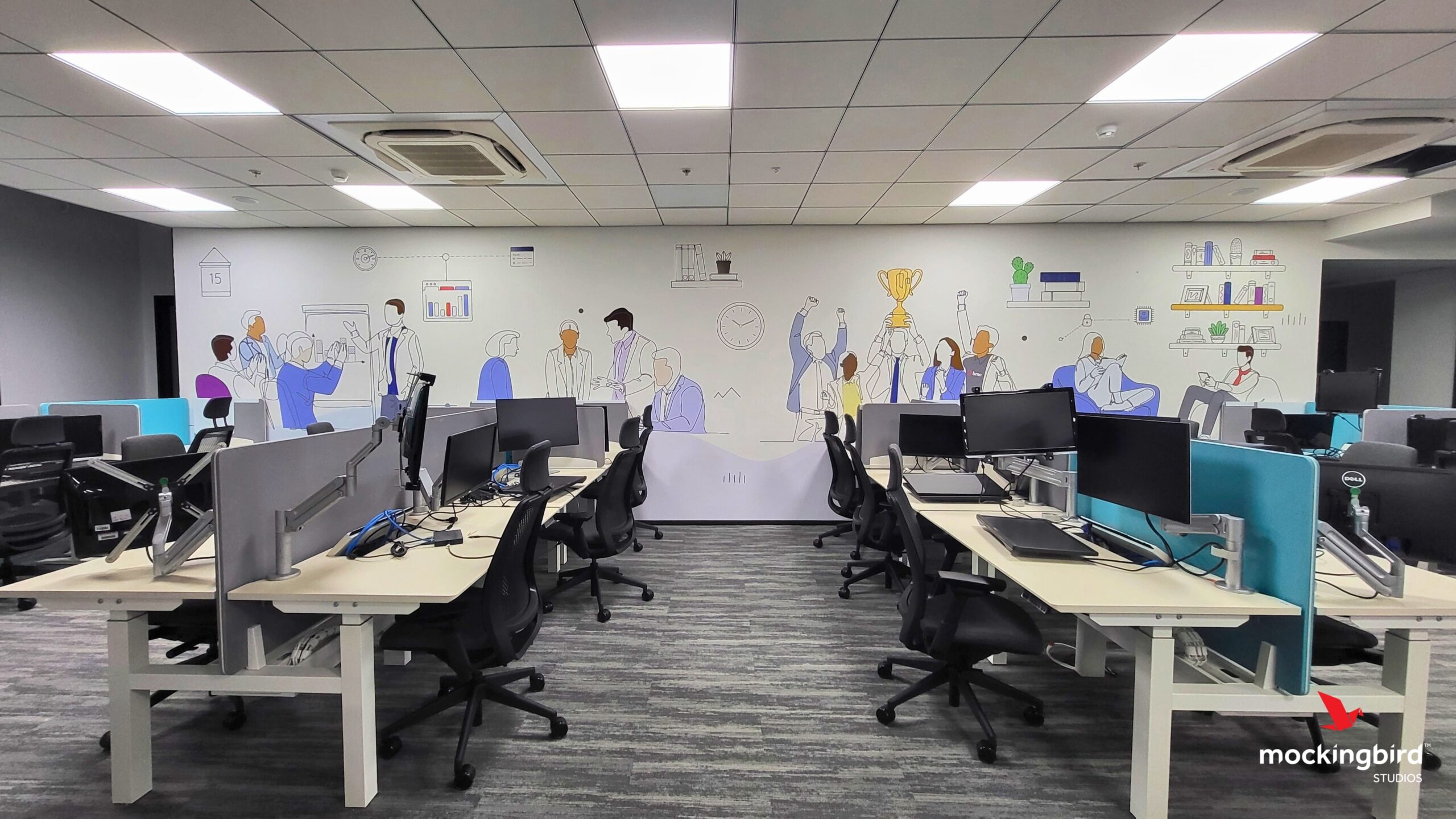
A brand is more than its logo. Its journey, values, achievements and vision all contribute to its identity.
Custom wall graphics allow businesses to communicate these elements visually. Company timelines, brand milestones and core values can turn reception areas and corridors into engaging storytelling spaces.
For corporate offices, this creates a stronger connection with employees and visitors. Educational institutions can showcase their history and achievements, while hospitals can communicate their commitment to care through thoughtful visual designs.
2. Minimalist Typography and Statement Walls
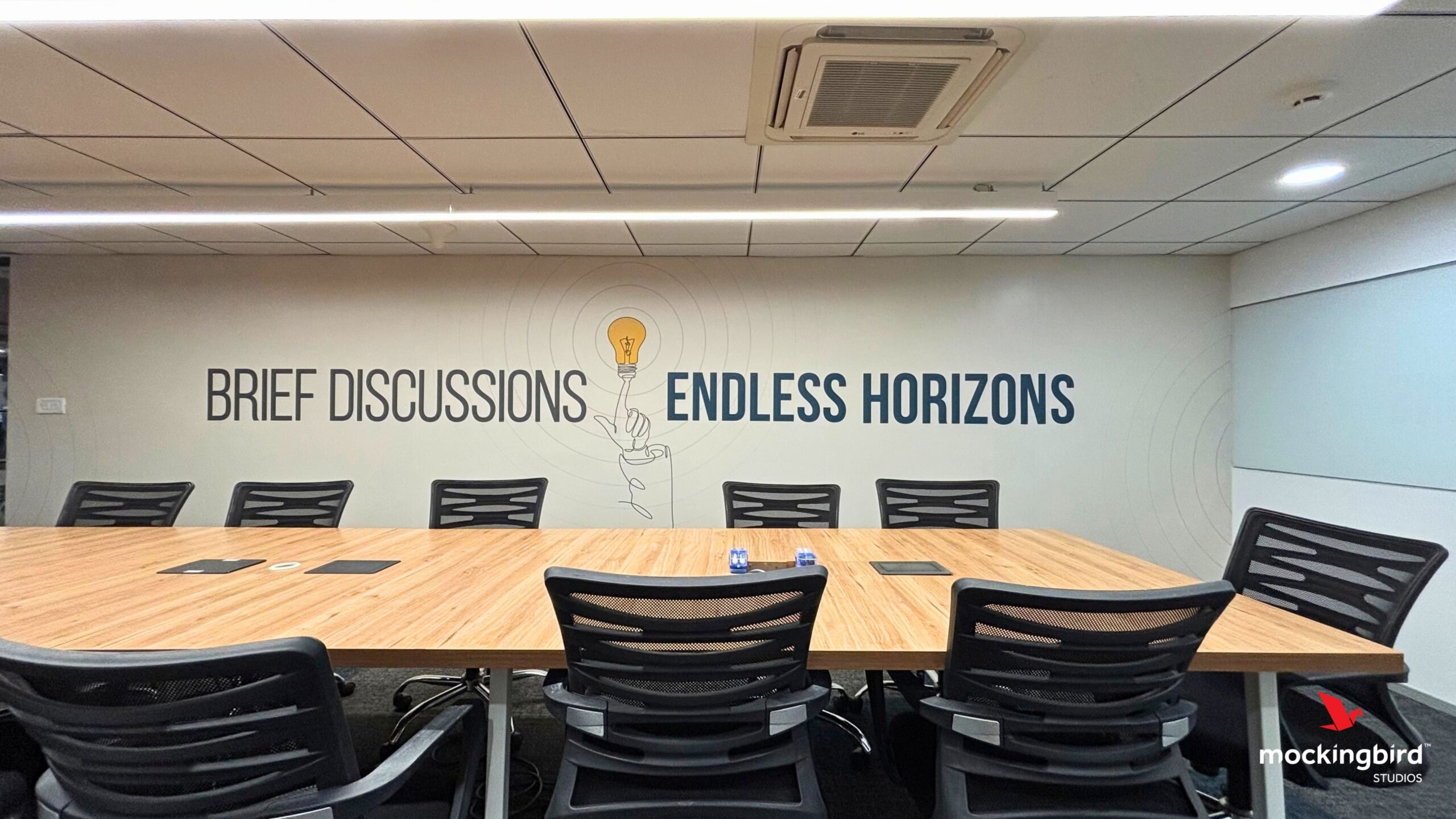
Sometimes, a simple message can make a stronger impression than an elaborate design.
Minimalist typography and statement walls are becoming popular in commercial spaces because they communicate ideas without overwhelming the environment.
A carefully placed brand message, company philosophy or meaningful quote can add character to an otherwise plain wall.
Corporate offices can use typography to reflect their culture, schools can display inspiring educational messages and hospitality spaces can introduce their personality through distinctive lettering.
The key is to maintain a balance between typography, colour and surrounding architecture.
3. Nature-Inspired Wall Graphics and Biophilic Designs
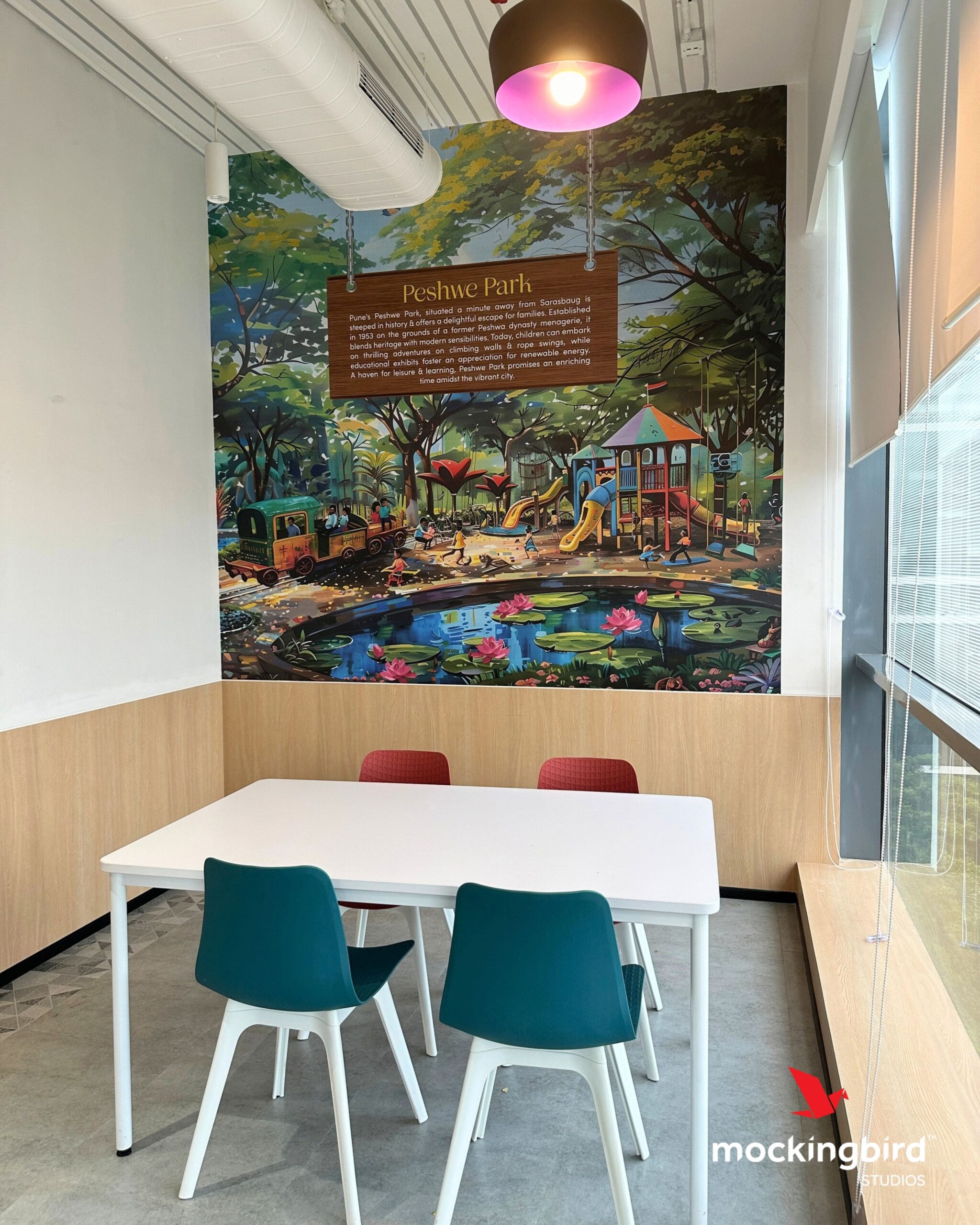
Nature-inspired wall graphics bring elements of the outdoors into commercial environments.
Botanical illustrations, landscapes, natural textures and organic patterns can introduce a refreshing visual element into spaces where natural features may be limited.
In hospitals, calming nature-inspired graphics can contribute to a welcoming atmosphere. Corporate offices can incorporate them into cafeterias and breakout areas, while schools can use nature-themed murals to create engaging learning environments.
For hospitality spaces, botanical wall graphics and destination-inspired visuals can complement the overall interior theme.
4. Interactive and Experiential Wall Branding
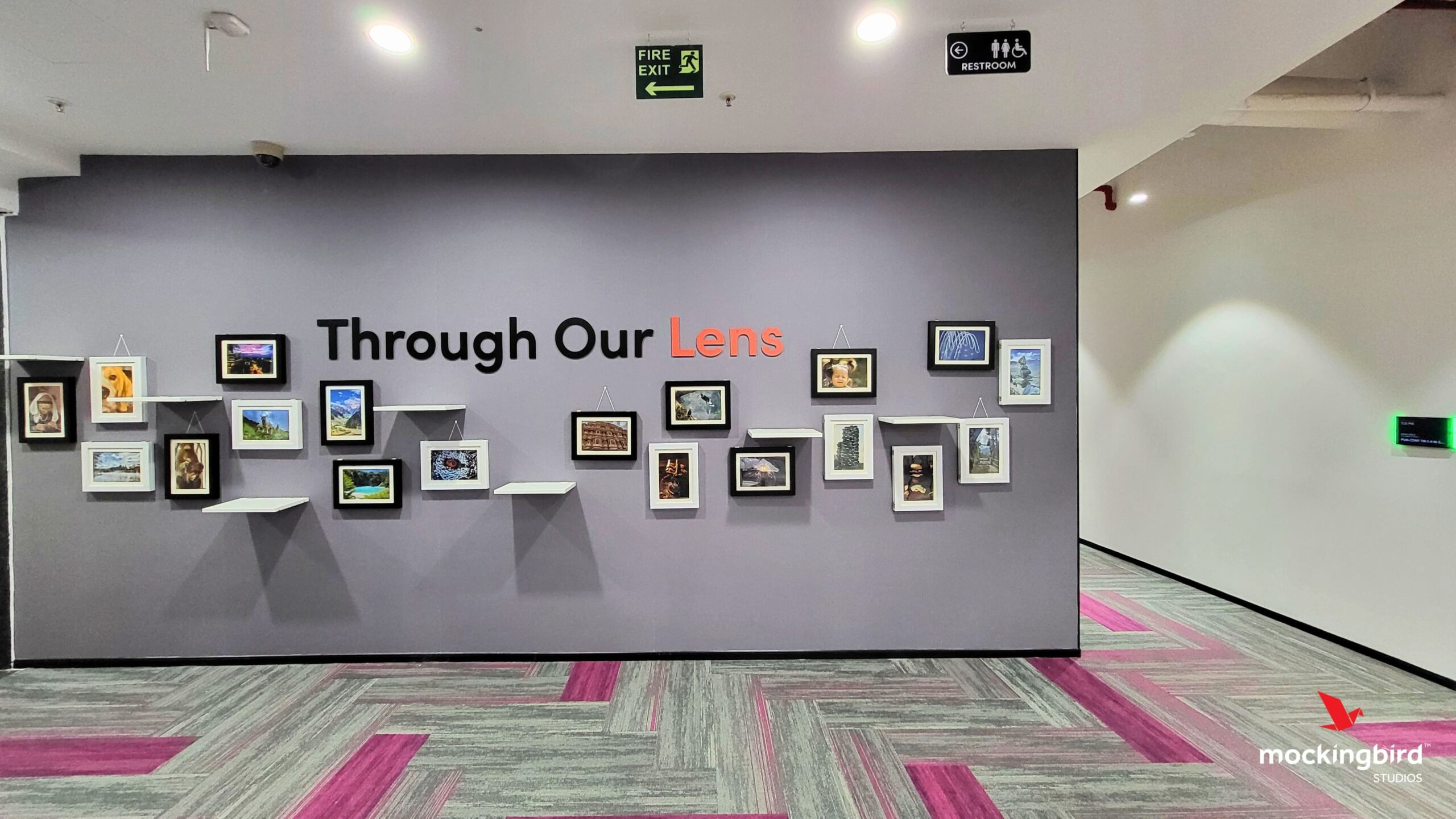
Modern wall branding is moving beyond decoration towards engagement.
Interactive wall graphics encourage people to connect with their surroundings through visual information, educational illustrations, activity-based designs and creative installations.
Schools can introduce subject-based learning walls and interactive corridor graphics. Hospitals can use visual wayfinding to help visitors navigate facilities, while corporate offices can create employee engagement walls and collaborative spaces.
In hospitality environments, distinctive feature walls can also create memorable visitor experiences.
When designed with a clear purpose, interactive wall branding combines creativity with functionality.
5. Large-Format Murals and Visual Storytelling
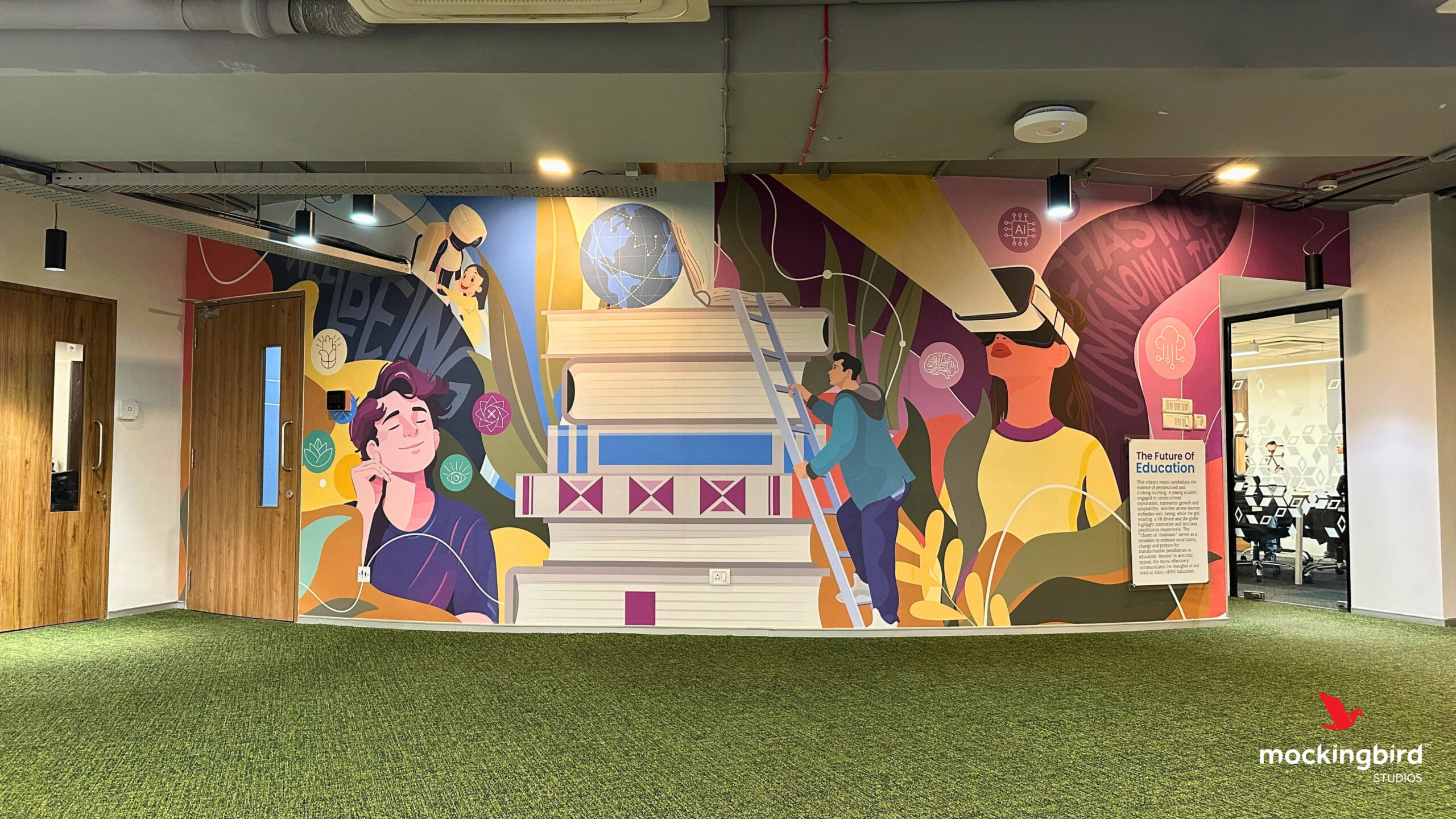
Large-format murals offer businesses an opportunity to transform expansive blank walls into distinctive visual features.
These murals can incorporate illustrations, photography, architectural landmarks, abstract artwork or themes connected to the organisation’s identity.
Corporate offices can use city-inspired murals or company culture illustrations. Schools can create educational stories across corridors and libraries, while hospitals can introduce welcoming visuals into waiting areas and patient corridors.
Hotels and restaurants can use murals inspired by local culture or destination themes.
Beyond their visual appeal, large-format murals help create a consistent identity across commercial environments.
6. Industry-Specific Wall Branding
Every commercial space serves a different purpose, and its wall branding should reflect that.
- Corporate offices: Brand values, company culture, reception graphics and workspace identity.
- Hospitals: Patient-friendly visuals, wayfinding graphics and welcoming environments.
- Educational institutions: Learning walls, campus identity and subject-based illustrations.
- Hospitality: Destination-inspired murals, distinctive feature walls, and guest experiences.
Industry-specific wall branding ensures that designs are not simply attractive but also relevant to the people who use the space.
Conclusion: Turning Walls into Brand Experiences
Commercial wall branding is no longer limited to placing a company logo on a reception wall. It offers businesses an opportunity to communicate their identity, create engaging environments and make their spaces more memorable.
From storytelling graphics and minimalist typography to large-format murals and industry-specific designs, the possibilities are expanding across corporate, healthcare, educational and hospitality environments.
At Mockingbird Studios, we help businesses transform ordinary walls into thoughtfully designed branded environments through custom wall graphics, visual storytelling, production and professional installation.
Because every wall has the potential to tell a story.
Mockingbird Studios – Turning Walls into Stories.